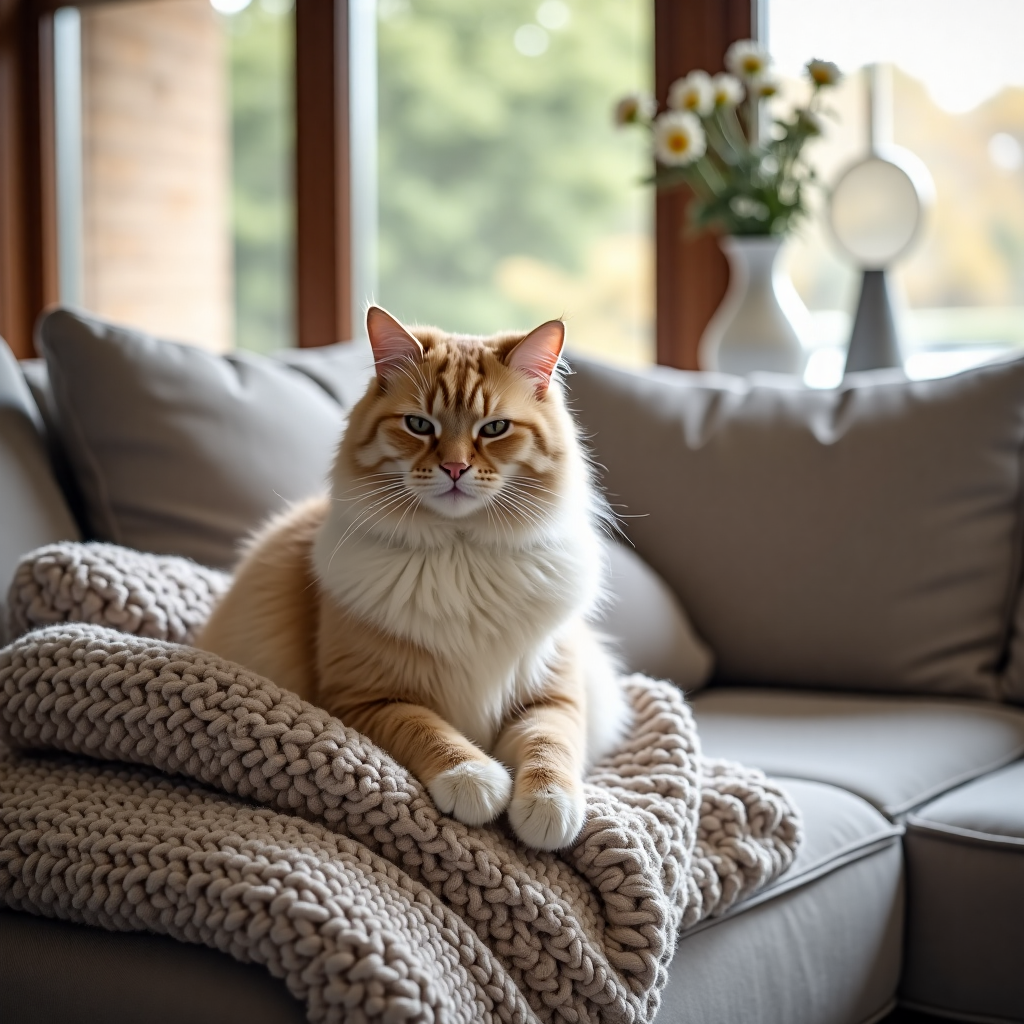
If you have ever settled onto the couch after a long day only to have your cat climb onto your lap and begin rhythmically pushing their paws into your thighs, you have experienced one of the most recognizable and endearing feline behaviors: kneading. Often called “making biscuits” or “mashing potatoes,” this rhythmic pressing of the paws against a soft surface confuses many cat owners. Is it a sign of love? A throwback to kittenhood? A territorial claim? Or could it sometimes signal something more serious? The truth is that kneading is a deeply rooted, multi-layered behavior that can mean several different things depending on the context, your cat’s personality, and their environment.
As a cat owner, understanding why your cat kneads can help you strengthen your bond, respond appropriately to their needs, and even identify rare cases where the behavior might be tied to discomfort. In this guide, we will explore the biological, emotional, and evolutionary reasons behind kneading. We will also look at why cats choose certain people or objects, how to manage the sharp claws that often accompany this charming habit, and when kneading might warrant a closer look.
Whether your cat gently presses their paws into your chest while purring or aggressively pummels a fleece blanket for ten minutes before settling down, the behavior is rarely random. It is a window into your cat’s instincts, emotions, and long history as both a domesticated companion and a wild predator. By the end of this article, you may find yourself looking at those rhythmic paws with a new sense of appreciation.
What Exactly Is Kneading?
Kneading is a repetitive, rhythmic motion in which a cat alternates pushing its front paws down into a soft surface. Usually, the cat will flex and extend the toes, sometimes extending the claws with each push. The motion closely resembles a baker working dough, which is why the behavior is affectionately known as “making biscuits.” Some cats knead with all four paws, but most rely primarily on the front two. The eyes may be half-closed, the body relaxed, and the paws may move slowly or with surprising intensity. Purring, drooling, and soft vocalizations often accompany the behavior.
While kneading is completely normal in most cases, it can look slightly different from one cat to another. Some cats barely touch the surface with their paws, while others dig in with full force. Some will knead only soft blankets, while others target their owner’s stomach, chest, or lap. A few cats even knead the air while lying on their side, a behavior often called “air kneading.” All of these variations are usually normal and rooted in the same suite of instincts and emotional responses.
It is important to remember that kneading is not a sign of disobedience or bad behavior. Even when claws cause discomfort, the cat is not intentionally trying to hurt you. Instead, they are acting on deep-seated impulses that feel natural and comforting to them. Recognizing the purpose behind the behavior is the first step in appreciating it and managing any challenges that come with it.
The Kittenhood Connection: Rooted in Early Life
The most widely accepted explanation for kneading traces back to the earliest days of a cat’s life. From the moment kittens are born, they rely on their mother for warmth, safety, and nutrition. During nursing, kittens instinctively knead the area around their mother’s mammary glands. This rhythmic pressure helps stimulate milk flow and ensures the kitten receives enough nourishment during feeding. The motion is often accompanied by suckling and a profound sense of security.
This early association between the paw movement and the comfort of being fed, warm, and close to the mother creates a powerful emotional imprint. Even as cats grow and no longer need to stimulate milk flow, the physical motion remains connected to feelings of safety, contentment, and love. In this sense, kneading is a kind of behavioral relic from kittenhood — one that many cats never fully outgrow.
Why Kittens Knead Their Mothers
Kittens are born blind, deaf, and entirely dependent on their mother. The kneading motion serves a practical purpose in those first few weeks. By pressing rhythmically against the mother’s belly, the kitten encourages the release of oxytocin, which in turn facilitates milk letdown. It is a survival mechanism as much as a comfort behavior. The kitten also learns to associate the scent of the mother, the warmth of her body, and the act of kneading with a complete sense of safety.
Carrying the Habit into Adulthood
Because kneading is tied to such a positive early experience, many adult cats continue the behavior when they feel relaxed and content. This is especially common in cats that were weaned at an appropriate age and had positive early interactions with their mothers and littermates. However, even cats that were orphaned or weaned early may knead, though the behavior can sometimes appear alongside sucking on fabric or clothing, which may indicate a lingering oral fixation from premature weaning.
In adulthood, kneading no longer serves a direct biological purpose for milk stimulation, but it remains a powerful emotional expression. It is often seen as a sign that your cat feels safe enough to regress into a kitten-like state around you. This is one of the highest compliments a cat can give.
Scent Marking: Your Cat’s Invisible Signature
Cats are highly territorial animals that rely on scent communication as a primary way to understand and interact with their environment. Kneading plays an important role in this invisible world of chemical signals. Cats have scent glands located in various parts of their bodies, including their cheeks, chin, tail, and paw pads. When a cat kneads a surface, they release pheromones from the glands in their paws. These pheromones carry information about the cat’s identity, emotional state, and territorial boundaries.
When your cat kneads a blanket, bed, or your lap, they are effectively marking that object or person as familiar and safe. The pheromones left behind are undetectable to humans, but to a cat, they create a comforting scent landscape that says, “This is mine, and I belong here.” This is one reason why cats often return to the same kneading spots again and again. The familiar scent reinforces their sense of security.
- Paw pad glands: Release pheromones during kneading to mark territory.
- Cheek and chin glands: Often used when cats rub their faces against objects or people.
- Tail base glands: Used when cats brush their bodies against furniture or legs.
- Urine and feces: More intense forms of territorial marking used in different contexts.
Understanding this scent-marking function helps explain why some cats become particularly attached to certain objects, such as a favorite blanket or a specific spot on the couch. It is not simply a random preference — it is a chemical claim of ownership and emotional security.
Comfort, Security, and the “Happy Place” Effect
For most cats, kneading is a deeply calming behavior. It often occurs when the cat is settling down for a nap, relaxing after a meal, or spending quiet time with their favorite person. The repetitive motion can have a self-soothing effect, similar to how some humans might tap their fingers, hum softly, or wrap themselves in a blanket when they feel comfortable. The rhythmic movement helps release tension and usher the cat into a state of deep relaxation.
You may notice that your cat purrs while kneading, drools slightly, or closes their eyes halfway. These are all signs of a content and relaxed feline. In many cases, the cat appears to enter a mild trance-like state. This is entirely normal and indicates that the cat feels safe enough to let their guard down. If your cat kneads on you while you are sitting or lying down, they are likely using the behavior to bond with you and create a shared moment of calm.
Kneading as a Form of Self-Soothing
Cats are often seen as independent and self-reliant animals, but they still experience stress and anxiety in daily life. Loud noises, changes in routine, new pets, unfamiliar visitors, or trips to the vet can all trigger low-level stress. For some cats, kneading becomes a coping mechanism. Engaging in a familiar, instinctive behavior helps them self-regulate and restore a sense of normalcy. This is especially common when a cat kneads a soft blanket or a piece of clothing that carries their owner’s scent.
A cat who kneads before sleeping is often performing a bedtime ritual that signals safety and comfort. Just as a human might fluff a pillow or adjust the sheets, a cat kneads to create a comfortable resting spot and to reassure themselves that all is well in their territory.
Territorial Instincts from Wild Ancestors
Although domestic cats have lived alongside humans for thousands of years, they retain many behaviors inherited from their wild ancestors. One popular theory suggests that kneading may originate from the practice of patting down grass, leaves, or other vegetation to create a comfortable sleeping area in the wild. Before the advent of cozy store-bought cat beds, wild cats had to rely on natural materials for rest, and pressing down foliage would have made a softer, safer, and more insulated nest.
This nesting instinct likely persists in modern domestic cats, even though they now have plush beds, blankets, and couches at their disposal. When your cat kneads a blanket before lying down, they may be acting on an ancient impulse to prepare a safe resting place. It is a small reminder that even the most pampered house cat carries the shadow of a wild predator in its DNA.
From Wild Grass to Your Favorite Blanket
In the wild, a cat also needed to check for hidden dangers in the ground, such as sharp sticks, rocks, or small creatures. Kneading and pressing down the grass helped expose potential hazards before settling down. Modern cats do not face the same dangers on your living room floor, but the behavior persists as a kind of inherited ritual. The texture of a soft blanket or a pile of laundry may trigger the same instinct, especially if it mimics the feel of grass or leaves under the paws.
This ancient nesting behavior is not driven by anxiety but by a hardwired preference for a safe and comfortable sleeping spot. It is another piece of the puzzle that makes kneading such a fascinating behavior to observe.
Hormonal and Mating-Related Kneading
In some cases, kneading may be connected to hormonal changes, particularly in unspayed female cats. During estrus, or the heat cycle, a female cat may knead more frequently as part of a broader suite of mating behaviors. She may become more affectionate, vocalize loudly, roll on the floor, and knead soft surfaces or people. This type of kneading is generally accompanied by other signs of being in heat, such as an elevated rear end, restlessness, and increased attention-seeking.
Male cats may also knead more often when they are feeling especially secure or when responding to the presence of a female in heat. However, for the vast majority of pet cats, kneading is not primarily a sexual behavior. Spaying or neutering your cat can reduce hormonally driven kneading, but it will not eliminate the behavior altogether because the instinct is rooted in deeper emotional and territorial pathways.
If your cat suddenly begins kneading more intensely or frequently and you suspect a hormonal cause, consult your veterinarian. In an unspayed cat, increased kneading alongside other heat behaviors is usually normal, but a sudden change in any behavior warrants a professional opinion.
When Kneading Could Be a Sign of Stress or Pain
Although kneading is usually a positive behavior, there are times when it may signal that something is wrong. Cats are masters at hiding pain and discomfort, so any change in behavior should be taken seriously. If your cat suddenly starts kneading more often, more intensely, or in unusual situations, it could indicate anxiety, discomfort, or a medical issue.
For example, a cat that is experiencing gastrointestinal discomfort might knead a soft surface repeatedly as a self-soothing behavior. Cats with joint pain or arthritis may knead less because the motion causes discomfort, while others may knead more as a way to stretch and relieve stiffness. If kneading is accompanied by other concerning signs such as loss of appetite, hiding, vocalizing in pain, changes in litter box habits, or aggression, it is important to contact your veterinarian.
- Sudden increase in kneading: Could indicate stress, anxiety, or unresolved discomfort.
- Sudden decrease or avoidance of kneading: May point to pain, arthritis, or injury in the paws or legs.
- Kneading accompanied by other distress signals: Hiding, hissing, excessive grooming, or loss of appetite should be evaluated by a vet.
- Kneading only one object obsessively: Can be a self-soothing behavior related to early weaning or stress.
How to Tell the Difference Between Happy Kneading and Stress Kneading
Happy kneading is usually slow, relaxed, and often paired with purring, soft eyes, and a loose body. The cat may settle down and fall asleep after a few minutes. Stress kneading, on the other hand, may appear more frantic or compulsive. The cat might seem unable to settle, may pant, flatten their ears, or twitch their tail. Some stressed cats knead with their claws fully extended and become agitated if interrupted. Observing your cat’s overall body language will help you determine whether the behavior is a source of comfort or a cry for help.
If you suspect stress kneading, consider recent changes in the household. A new pet, a move, a different work schedule, or even rearranged furniture can upset a sensitive cat. Providing quiet spaces, consistent routines, and calming enrichment can help reduce stress-related kneading over time.
Why Cats Knead Specific People and Objects
Many cat owners notice that their cat only kneads certain people, while ignoring others. They may also have a favorite blanket, pillow, or item of clothing that receives the majority of their biscuit-making attention. This selectivity is meaningful. Cats are highly individual creatures with strong preferences shaped by scent, texture, and emotional association.
Why Does My Cat Knead Me?
If your cat chooses to knead on your lap, chest, stomach, or legs, take it as a compliment. Your cat associates you with safety, warmth, and affection. The scent glands in their paws are marking you as part of their trusted inner circle. They may also be drawn to the softness of your clothing or the steady rhythm of your breathing and heartbeat. In some cases, a cat may knead your belly because it is warm and soft, or because you are lying still and providing a perfect surface for the behavior.
Some cats become so relaxed while kneading their owner that they begin to drool. This is usually a sign of deep contentment and is linked to the same pleasurable response that occurs during kittenhood nursing. While the drool may be inconvenient, it is a strong indicator that your cat feels completely at ease with you.
Why Do Some Cats Knead Soft Blankets or Clothing?
Soft textures closely mimic the warmth and softness of a mother cat’s belly. Blankets made from fleece, wool, or plush fabrics are especially attractive to kneading cats. Clothing that carries your scent can be even more appealing because it combines the comfort of your smell with the soft texture. A cat that kneads a sweater you have worn is essentially seeking the combined reassurance of your presence and the tactile satisfaction of the fabric.
Some cats also suck on the fabric while kneading. This behavior is most frequently seen in cats that were weaned too early or orphaned as kittens. It is generally harmless unless the cat is ingesting fabric fibers, which can lead to intestinal blockages. If your cat sucks or chews on fabric obsessively, it may be worth discussing with your veterinarian or a feline behaviorist.
Should You Stop Your Cat from Kneading?
In most cases, you should not try to stop your cat from kneading. It is a natural, healthy behavior that helps your cat feel secure and connected to you. Punishing or scolding a cat for kneading would be counterproductive and could damage your bond. Cats do not understand punishment the way humans do, and reacting negatively to an instinctive behavior may create anxiety and confusion.
That said, the sharp claws that often accompany kneading can cause genuine discomfort. The goal should not be to eliminate the behavior, but to manage it in a way that protects your skin and furniture while preserving your cat’s emotional well-being.
Managing Claws and Protecting Furniture
- Keep your cat’s nails trimmed regularly: Blunt claws are far less painful when kneading on skin and less damaging to fabric.
- Provide a dedicated kneading blanket: Keep a thick, soft blanket nearby and gently redirect your cat to it when they start kneading on you.
- Use a pillow or cushion as a barrier: Placing a thick pillow on your lap can allow your cat to knead close to you without digging into your thighs.
- Reward soft-pawed kneading: Praise or offer a treat when your cat kneads without extending claws, reinforcing gentler behavior over time.
- Consider nail caps: Soft nail caps are a safe option for some cats, though they require proper application and maintenance.
- Never declaw your cat: Declawing is an invasive surgery that amputates part of the toe bones and can cause long-term pain and behavioral issues.
Frequently Asked Questions About Cat Kneading
Why does my cat purr while kneading?
Purring during kneading is a sign of deep comfort and security. The combination of the rhythmic paw movement and the soothing vibration of the purr helps the cat relax. This is one of the clearest signals that your cat is enjoying the moment and feels safe with you.
Why does my cat drool while kneading?
Drooling while kneading is common and usually harmless. It is linked to the memory of nursing, when kneading and suckling were associated with milk and comfort. Some cats simply become so relaxed that their mouth falls slightly open and saliva escapes. As long as the drooling is occasional and your cat is otherwise healthy, it is not a concern.
Is kneading always a sign of happiness?
No. While kneading is most often a sign of comfort and contentment, it can occasionally be a self-soothing behavior in response to stress or pain. Observing your cat’s overall body language and any accompanying changes in behavior will help you determine the emotional state behind the kneading.
Why does my cat stare at me while kneading?
Some cats maintain eye contact or gaze at their owner while kneading. This can be a sign of trust and affection. In cat body language, a soft, relaxed gaze is not confrontational but rather a quiet acknowledgment of connection. Your cat may also be checking for your reaction to see if you are comfortable and accepting of the behavior.
Can kneading be harmful to my cat?
In the vast majority of cases, kneading is completely harmless. However, if your cat is obsessively kneading to the point that they cannot settle, or if they are chewing and ingesting fabric during the behavior, there may be underlying anxiety or a medical concern. In those cases, a veterinary visit is recommended.
Conclusion: Embrace the Biscuit-Making Bond
Kneading is one of the most charming and misunderstood behaviors in the feline world. From its roots in kittenhood nursing to its role in scent marking and territorial preparation, this rhythmic paw motion carries layers of meaning that reflect your cat’s instincts, emotions, and history. When your cat kneads on you, they are not simply using you as a convenient surface — they are telling you that you are a source of comfort, security, and love.
The next time your cat climbs onto your lap, purrs, and begins to push their paws softly against you, remember that you are witnessing a behavior that has been passed down through generations of felines. It is a small, wordless declaration of trust. Instead of pushing your cat away, celebrate the moment. Reach for a soft blanket if the claws are sharp, trim those tiny needles if needed, and let your cat enjoy their happy place.
By understanding why cats knead, you can better meet their needs, deepen your bond, and ensure that every “biscuit-making” session remains a positive experience for both of you. Your cat’s paws may be small, but the message behind them is enormous: you are their safe space, their chosen person, and the keeper of their comfort.